
There are places on Earth that feel like they belong to another planet entirely. Wadi Rum is one of them. Known as the Valley of the Moon, this vast expanse of red sand, towering sandstone cliffs, and endless silence is Jordan's most dramatic natural landscape. But Wadi Rum is more than a place to see — it's a place to feel. Spending a night beneath the desert sky, surrounded by nothing but ancient rock and a canopy of stars, is one of the most transformative travel experiences you can have anywhere in the world.
In This Guide
What Is Wadi Rum?
Wadi Rum is a protected desert wilderness in southern Jordan, roughly 60 kilometers east of the port city of Aqaba and about 110 kilometers south of Petra. Covering an area of 720 square kilometers, it was inscribed as a UNESCO World Heritage Site in 2011 as a mixed natural and cultural property — one of only a handful of places in the world to receive this dual designation.
The name "Wadi Rum" translates roughly to "Valley of the Moon," and once you arrive, you understand why. The landscape is otherworldly — an immense, silent expanse of rust-colored sand punctuated by massive sandstone and granite mountains that rise abruptly from the desert floor, some reaching over 1,750 meters in height. Jebel Rum, the second-highest peak in Jordan at 1,754 meters, dominates the southern horizon. The desert has been inhabited for over 12,000 years, and evidence of human presence is everywhere: Thamudic inscriptions, Nabataean temples, and rock art depicting hunting scenes and caravans stretching back millennia.
For the Bedouin tribes who still call Wadi Rum home — principally the Zalabia tribe — the desert is not a barren emptiness but a living landscape filled with stories, paths, and meaning. Their intimate knowledge of the terrain, the weather patterns, and the desert's subtle rhythms makes them the best possible guides through this extraordinary place.
The Landscape: A World Carved by Time
Wadi Rum's landscape is the result of millions of years of geological activity. The sandstone mountains — called jebels — were formed when an ancient ocean receded, leaving behind layers of sediment that were slowly compressed into rock. Wind and water erosion over millennia sculpted these formations into the dramatic shapes you see today: towering pillars, sweeping arches, narrow canyons, and vast open plains of red and golden sand.
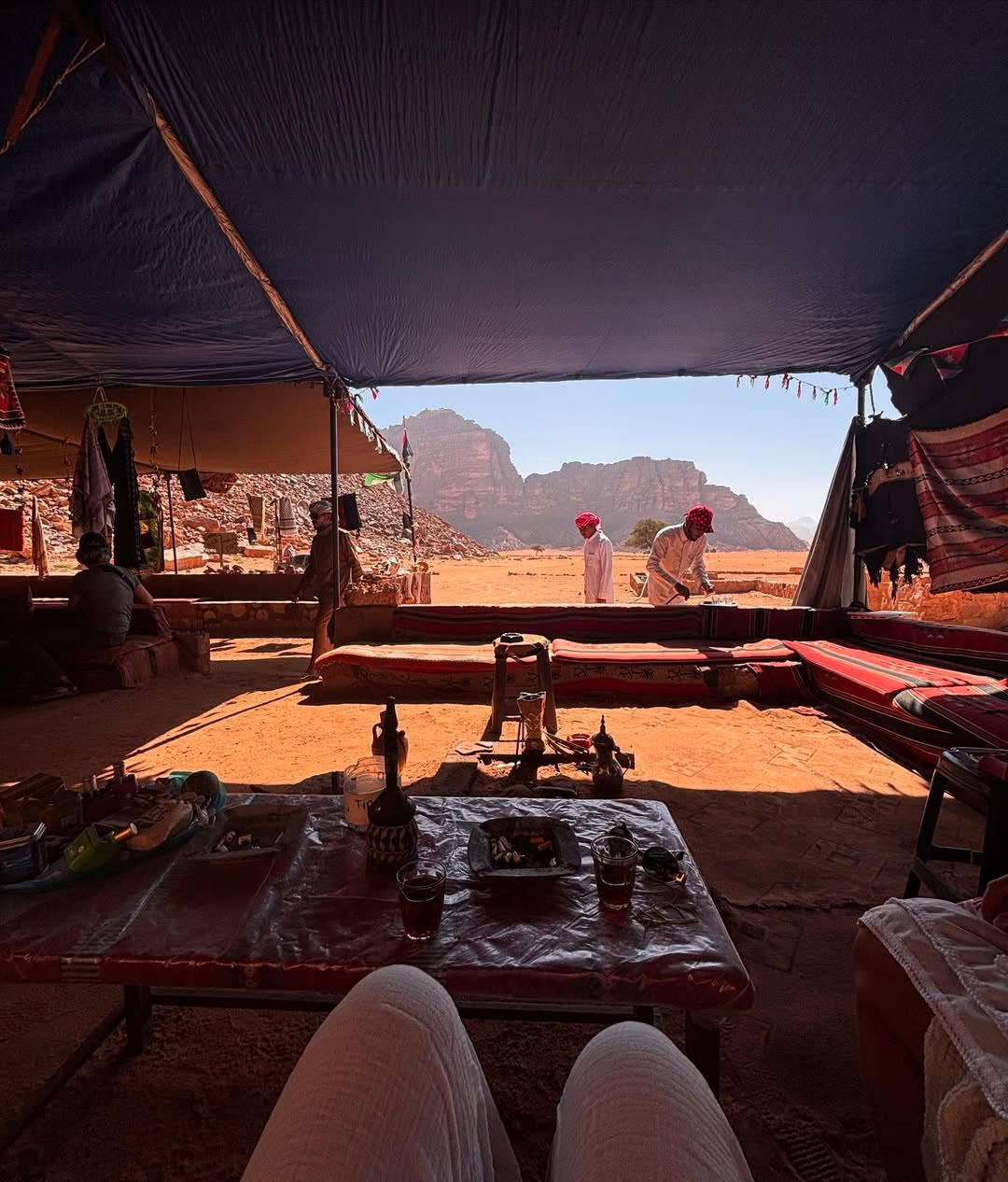
Among the most striking natural formations is Um Frouth Rock Bridge, a natural stone arch that you can climb for panoramic views of the surrounding desert. Burdah Rock Bridge, standing 35 meters above the ground, is one of the highest natural arches in the world and a challenging but rewarding scramble for adventurous visitors. Khazali Canyon is a narrow siq — much like a miniature version of Petra's famous entrance — where ancient Thamudic and Nabataean inscriptions adorn the walls, depicting human figures, animals, and feet, offering a glimpse into desert life thousands of years ago.
The colors of Wadi Rum shift constantly throughout the day. At dawn, the desert glows a soft pink and amber. By midday, the sand turns a deep burnt orange under the blazing sun. But it is at sunset when Wadi Rum is at its most breathtaking — the mountains turn crimson and violet, the shadows stretch impossibly long, and the silence deepens as the last light fades from the sky. The colors here are not something a photograph can fully capture; they must be experienced in person.
The terrain also includes petroglyphs scattered across rock faces throughout the protected area. These ancient carvings — some dating back over 4,000 years — depict hunting scenes, camel caravans, and celestial symbols. They are a powerful reminder that this landscape, despite its apparent emptiness, has been a crossroads of human civilization for millennia.
Activities in Wadi Rum
Wadi Rum is not a place for passive sightseeing. The desert invites exploration, and there is no shortage of ways to immerse yourself in its vastness.
4x4 Jeep Tours
The most popular way to explore Wadi Rum is by open-back 4x4 jeep, driven by a local Bedouin guide who knows every canyon, arch, and inscription site in the desert. A typical jeep tour lasts between two and four hours and covers the major landmarks: the Seven Pillars of Wisdom, Lawrence's Spring, Khazali Canyon, the natural rock bridges, ancient inscriptions, and towering sand dunes. The open-back design means you feel the wind, the sun, and the immensity of the landscape as you move through it — an experience that is exhilarating and deeply grounding at the same time.
Camel Riding
For a slower, more traditional experience, camel riding allows you to cross the desert the way Bedouins have for centuries. Camel treks range from short one-hour rides to full-day expeditions that take you deep into the desert, far from the main tourist routes. The gentle rhythm of a camel's gait, the creak of the saddle, and the vast silence around you create a meditative, almost hypnotic experience. Sunset camel rides, in particular, are unforgettable — the dying light paints the mountains in shades of fire while you move quietly through the sand.
Hiking & Rock Climbing
Wadi Rum is a world-class destination for hiking and rock climbing. Routes range from easy canyon walks through narrow siqs to challenging multi-pitch climbs on the sandstone jebels. Popular hikes include the trail through Rakhabat Canyon, the scramble up to Burdah Rock Bridge, and the ascent of Jebel Rum itself — a full-day expedition that rewards climbers with views stretching across the entire desert and into Saudi Arabia. No technical equipment is needed for most canyon walks, but the bigger ascents require ropes, harnesses, and an experienced guide.
Hot Air Balloons
For those who want to see Wadi Rum from above, hot air balloon flights offer a perspective that few travelers experience. Floating silently over the desert at sunrise, with the sandstone jebels stretching to the horizon in every direction, is a surreal and unforgettable moment. Balloon flights typically last around one hour and operate in the early morning when winds are calm and the light is at its most magical.
Sandboarding & Stargazing
For something different, try sandboarding down the massive red dunes that accumulate against the mountain faces. It is not as smooth as snowboarding, but the thrill of sliding down a steep dune with nothing but desert in every direction is hard to beat. And when night falls, Wadi Rum reveals one of its greatest treasures: the night sky. With virtually no light pollution, the Milky Way stretches from horizon to horizon in a luminous band, and shooting stars are a regular occurrence. Many camps offer guided stargazing sessions with telescopes, pointing out constellations, planets, and deep-sky objects that are invisible from any city on Earth.
Bedouin Camps & the Overnight Experience
If you visit Wadi Rum and don't spend the night, you have only experienced half of what it offers. The overnight desert camp experience is the heart and soul of Wadi Rum, and it is something that stays with every traveler long after they return home.
Bedouin camps in Wadi Rum range from simple, authentic setups with mattresses laid out under goat-hair tents to more luxurious "glamping" options with private tents, en-suite bathrooms, and elevated platforms. But regardless of the level of comfort, every camp shares the same essential ingredients: desert silence, Bedouin hospitality, and a sky full of stars.
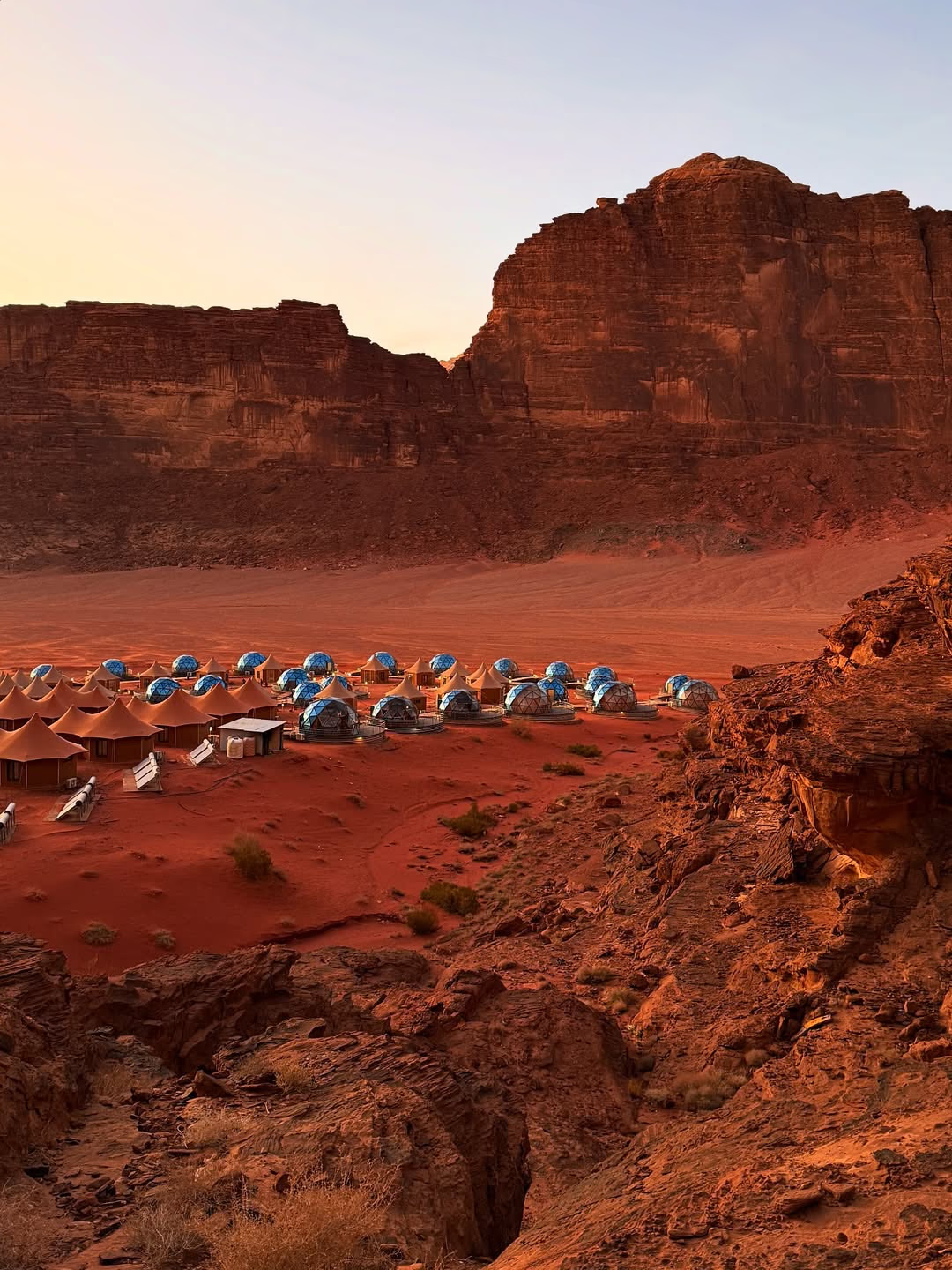
The evening at camp typically begins with sweet Bedouin tea — a fragrant blend of black tea brewed with fresh sage and generous amounts of sugar — served around an open fire as the sun sets. Then comes dinner, and in Wadi Rum, dinner means zarb. This traditional Bedouin feast is prepared by burying marinated chicken, lamb, and vegetables in an underground sand oven, where they slow-cook for several hours. The moment the zarb is unearthed is a genuine spectacle: the sand is brushed away, the metal cover is lifted, and clouds of aromatic steam rise into the evening air. The meat is impossibly tender, infused with the smoky flavors of the earth, and accompanied by rice, salads, hummus, and freshly baked bread.
After dinner, the camp fire crackles as Bedouin hosts share stories and sometimes play the rababa — a traditional single-stringed instrument whose haunting melodies seem to belong to the desert itself. Some travelers choose to sleep inside their tents, but many drag their mattresses outside to sleep directly under the open sky. There is nothing quite like lying on your back in the warm desert air, watching satellites trace lines between the stars, and falling asleep to absolute silence. When you wake at dawn, the first thing you see is the desert mountains blushing pink in the early light — a natural alarm clock that no hotel can replicate.
Lawrence of Arabia & Hollywood in the Desert
Wadi Rum's dramatic beauty has attracted storytellers for over a century. The most famous is T.E. Lawrence — Lawrence of Arabia — the British officer who, during World War I, helped lead the Arab Revolt against the Ottoman Empire alongside Sherif Hussein's forces. Lawrence lived and fought in Wadi Rum, using its labyrinth of canyons and mountains as a strategic base. His memoir, Seven Pillars of Wisdom, is named after a rock formation in Wadi Rum, and his vivid descriptions of the desert's beauty brought it to global attention.
David Lean's 1962 film Lawrence of Arabia, starring Peter O'Toole, was filmed extensively in Wadi Rum, and the sweeping desert cinematography remains some of the most beautiful ever committed to film. You can visit Lawrence's Spring, a natural water source high on a cliff face where Lawrence is said to have rested, and Lawrence's House, a ruined Nabataean structure that local tradition associates with the British officer.
Since then, Wadi Rum has become one of the world's most sought-after filming locations. Its alien, Mars-like landscape has stood in for other planets in numerous blockbuster films. Ridley Scott chose Wadi Rum to portray the surface of Mars in The Martian (2015), starring Matt Damon — and when you see the red sand and towering rock formations, it is easy to understand why. Star Wars: Rogue One (2016) and Star Wars: The Rise of Skywalker (2019) both used Wadi Rum for desert planet scenes. Denis Villeneuve's Dune (2021) filmed Arrakis sequences here, and the desert's vast emptiness and monumental scale translated perfectly to the screen. Other productions filmed in Wadi Rum include Prometheus, Transformers: Revenge of the Fallen, and Aladdin (2019).
Walking through the same landscapes you have seen on screen — knowing that this is real, not CGI — adds a layer of wonder to the Wadi Rum experience that few other destinations can match.
Wildlife & Ecology
Despite its harsh appearance, Wadi Rum supports a surprising variety of life. The desert ecosystem is fragile but resilient, adapted over millennia to extreme heat, scarce water, and punishing winds.
The most iconic wildlife resident is the Arabian oryx, a striking white antelope with long, straight horns that was hunted to near extinction in the wild but has been successfully reintroduced to Wadi Rum's protected area. Seeing a small herd of oryx moving across the red sand against a backdrop of sandstone mountains is one of the desert's most magical sights. Nubian ibex — agile mountain goats with impressive curved horns — can sometimes be spotted on the higher cliffs and ledges, navigating seemingly impossible rock faces with effortless grace.
Smaller mammals include the sand fox (Rüppell's fox), the Arabian wolf, and the hyrax — a small, round mammal that looks like a rodent but is, remarkably, the closest living relative of the elephant. Desert hares, hedgehogs, and several species of lizard and snake also call Wadi Rum home. Birdwatchers may spot Sinai rosefinches, desert larks, fan-tailed ravens, and occasionally soaring birds of prey including eagles and falcons.
The plant life is sparse but tenacious. Hardy desert shrubs, drought-resistant grasses, and the occasional acacia tree cling to life in the wadis and sheltered canyon floors where moisture collects. In spring, after rare winter rains, the desert can briefly burst into surprising color as wildflowers bloom across the sand — a fleeting spectacle that few visitors are lucky enough to witness.
Best Time to Visit Wadi Rum
Wadi Rum can be visited year-round, but the most comfortable months are March to May (spring) and September to November (autumn). During these periods, daytime temperatures are pleasantly warm — typically between 20°C and 30°C — and nights are cool enough for comfortable sleeping under the stars without being uncomfortably cold.
Summer (June to August) brings intense heat, with daytime temperatures frequently exceeding 40°C. While the desert is still beautiful, outdoor activities are best confined to early morning and late afternoon, and the midday heat can be punishing. Summer nights, however, are warm and spectacular for stargazing.
Winter (December to February) offers mild daytime temperatures around 10–15°C, but nights can drop to near freezing and occasionally below. If you plan a winter visit, bring warm layers for the evening and night. The upside of winter is crystal-clear skies, fewer tourists, and the dramatic contrast of cold mornings giving way to warm, golden afternoons.
For the best photography, visit during spring or autumn when the light is warm and the visibility is at its best. The golden hour — the first and last hour of sunlight — transforms Wadi Rum into a landscape of impossible color that looks almost painted.
What to Wear & Bring
Packing smart for Wadi Rum makes the difference between a comfortable experience and a challenging one. Here is what we recommend:
- Clothing: Lightweight, breathable layers that cover your shoulders and legs. The desert sun is strong, and loose-fitting clothes protect against both sunburn and sand. A warm fleece or jacket is essential for evenings and early mornings, even in spring and autumn — desert temperatures drop rapidly after sunset.
- Footwear: Closed-toe shoes with good grip for hiking and scrambling. Sandals are fine around camp but not suitable for jeep tours or canyon walks where loose rocks and hot sand are common.
- Sun protection: High-SPF sunscreen, a wide-brimmed hat or headscarf, and quality sunglasses. The desert sun is relentless, and there is virtually no natural shade.
- Water: Carry at least 2 liters per person for any excursion. Camps provide water, but having your own supply during jeep tours and hikes is essential.
- Camera: Bring extra batteries and memory cards. The cold desert nights drain batteries fast, and you will take far more photos than you expect.
- Headlamp or torch: Useful for navigating around camp after dark.
- Scarf or buff: A versatile item that protects against sun, wind, and sand. The Bedouin keffiyeh is ideal and can be purchased locally as a practical souvenir.
How to Get There
Wadi Rum is located in southern Jordan, easily accessible from several major destinations:
- From Aqaba: Approximately 60 kilometers north, about one hour by car. This is the closest city and the most convenient starting point if you are arriving by air through King Hussein International Airport.
- From Petra (Wadi Musa): Approximately 110 kilometers south, about 1.5 to 2 hours by car. Many travelers combine Petra and Wadi Rum into a single multi-day itinerary — and we highly recommend this combination.
- From Amman: Approximately 310 kilometers south via the Desert Highway, about 3.5 to 4 hours by car. The drive itself passes through Jordan's stark desert landscape and offers a gradual transition into the Wadi Rum environment.
The main entrance to the Wadi Rum Protected Area is at Rum Village, where you register at the visitor center. From there, your Bedouin guide will meet you and transport you into the desert by 4x4 jeep — because once you pass the visitor center, there are no paved roads, no signposts, and no GPS directions. The Bedouin navigate by landmarks, memory, and an instinct honed over generations.
Most visitors arrive as part of an organized tour, which handles all logistics including transport, the jeep safari, camp accommodation, and meals. This is the easiest and most comfortable way to experience Wadi Rum, especially for first-time visitors.
Ready to Sleep Under the Desert Stars?
Our Wadi Rum experiences include Bedouin-guided jeep tours, traditional zarb dinners, and unforgettable nights in the desert. Let us plan your perfect Wadi Rum adventure.
Plan Your Desert Adventure